
Farming is more than a livelihood for Rachel and Joel Grimes—it is a heritage written into their family histories and carried forward on their land in Paducah, Kentucky.
“My family moved up to Ballard County when I was six years old,” said Rachel Grimes, co-owner of Grimes Family Farm, a 62-acre patchwork of cattle pastures, goat herds, orchards, and flower plots. “I’m from Tennessee and both my grandfathers were farmers. One raised crops, the other livestock—he raised cows and horses and later raised coon dogs.”
Joel’s family roots stretch back to Bowling Green, Glasgow, Smiths Grove, and Park City, where his grandfather managed farms raising cows and tobacco.
“We (both) have farming heritage,” Joel said.
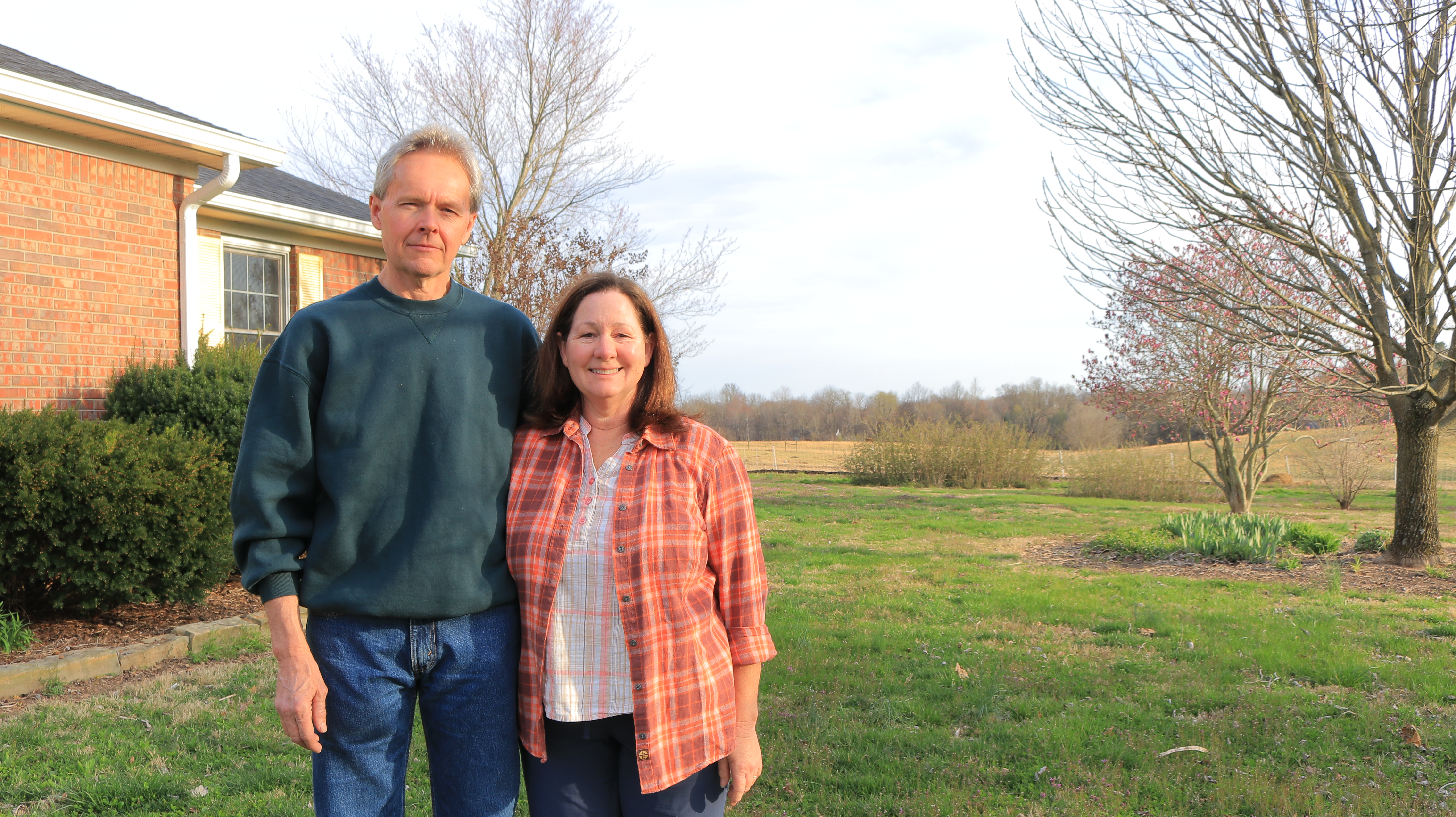 For Joel, the connection to the land is a reminder of his family. He recalled a memory from his college years when his grandparents would let him come by their farm property and allow him to raise a garden of his own—one he tended to every weekend.
Rachel also grew up around gardens, cultivating a love for agriculture from a young age. But she admitted she didn’t initially have the same fondness for garden work that Joel seemed to have.
“I always hated weeding and hoeing in the garden,” Rachel said with a laugh. “But once I moved out on my own, I couldn’t not have a garden. It’s in your blood, in your bloodstream. Now I even enjoy weeding!”
Their shared backgrounds made their eventual meeting while working in a chemical laboratory in Paducah feel almost destined.
“A farm boy can only stay in the subdivision so long,” Joel said, describing how their passion for the land drew them from town life to owning their own countryside property.
The couple found a small patch of land near their jobs and slowly built up their farm, starting about 18 years ago.
“We started with about nine acres,” Joel said. “Now we have 62 acres.”
Even while they continue to work full-time at the lab, Rachel and Joel’s land is fully utilized. They employ rotational grazing methods for cows and goats, which is a practice where farmers move crops or animals between different sections of land on a planned schedule. Instead of leaving one crop in the same spot or animals on the same pasture year-round, the land is rotated to rest and recover.
“It’s overwhelming some days,” Rachel said. Between lab work, managing livestock, and growing crops, their children, Daisy and Fox, play a crucial role in keeping the farm running.
Now, the family sells cows, goats, eggs, honey, vegetables, and flowers. The couple said they have an easy time selling their cows for beef slaughter, but they have a harder time with the goats.
“Goats each have personalities,” said Rachel.
“And you get to pet them and bottle-feed them,” Joel added. “So you get a little more attached to them.”
Flower farming became an artistic outlet for Rachel. She began cutting zinnias and marigolds to enjoy indoors, and soon local customers wanted to purchase them.
“This is, like, the fifth, sixth year that I have sold flowers,” Rachel recalled. “And this year, I’ve talked to the wholesaler here in Paducah… so he’s going to start buying from me too. So now I can get away from the farmer’s market.”
The farm also produces raspberries, blackberries, and honey from Joel’s beekeeping.
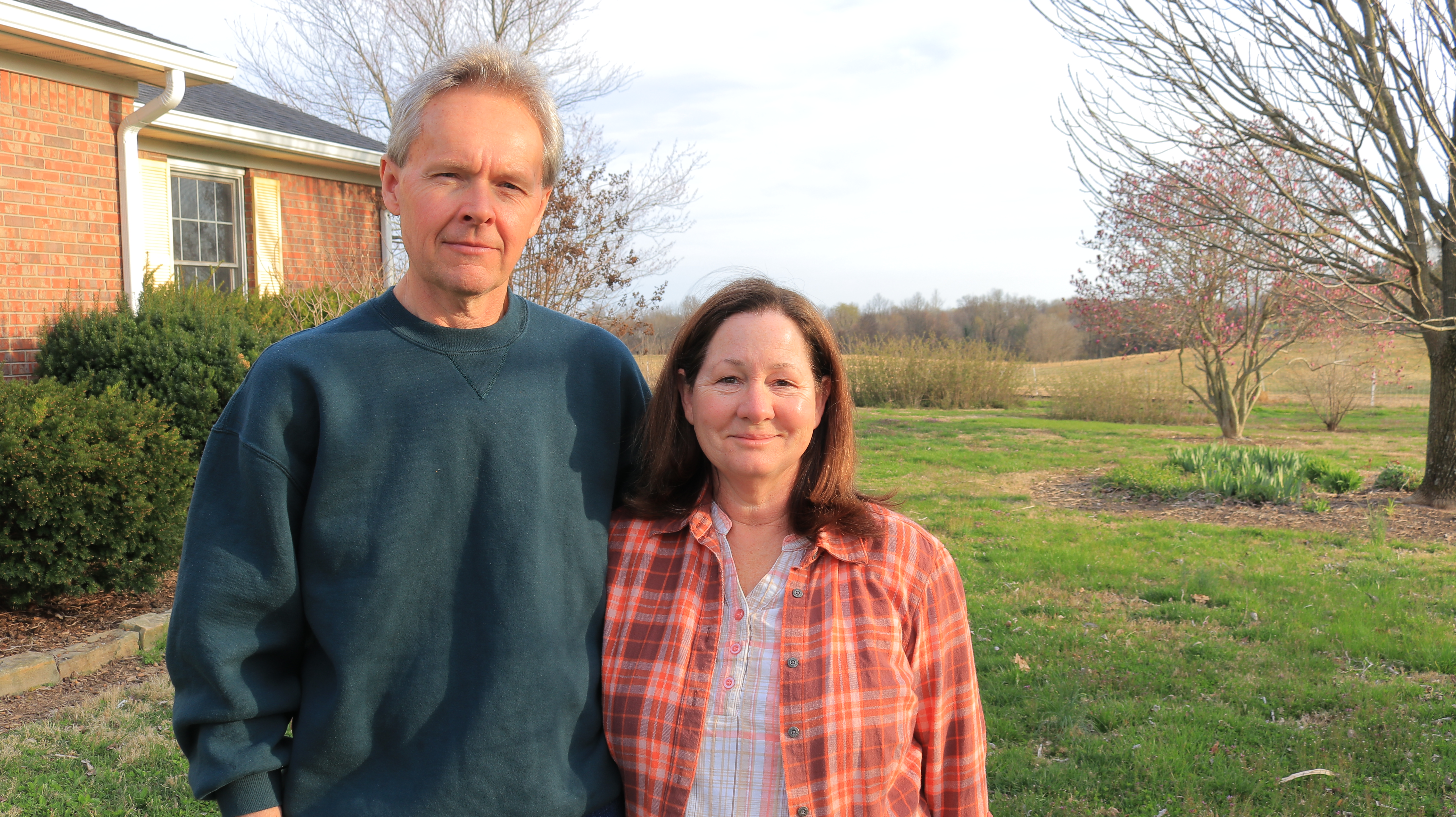 Managing livestock has been an ongoing learning process, the couple explained. They began with chickens and three goats, and now have roughly 70 goats along with 41 cows. Goats can produce offspring (or ‘kid’) twice a year, while cows follow a nine-month gestation cycle. According to Joel, selling animals, particularly bulls for butchering, is emotionally challenging.
“I mean, personally, I’m kind of a soft hearted person anyway” Joel said. “So every one we sell, I keep their names just so I can have their names when we sell them. And the day I sell them, it’s a bad day.”
Farming has also brought unexpected challenges. In 2019, a tornado devastated their barn and roof. Later, wildlife such as foxes and coyotes moved into the farm and threatened their animals. Maintaining a fruit orchard organically presents additional hurdles with invasive weeds and fungal infestations.
“I have to say, I’ve learned a lot,” Joel said. “Growing up, my grandfather made all the decisions, and I was helping him do things. But I had no idea until I started doing it myself. I didn’t realize how hard he had it.”
Despite the hardships, Rachel and Joel find joy and fulfillment in their work. From rotational grazing to flower farming, the Grimes’ farm exemplifies deep-rooted commitment to the land, their heritage, and the community that supports them.
“It’s meditative…hands in the dirt, seeing things grow,” Rachel said. “You learn something new every day.”
 KY Place