
When Louisville native Michael George first put a shovel into the soil behind his home, he didn’t imagine it would grow into an urban agricultural project that now feeds his neighbors in one of the city’s most underserved areas.
“I’ve always been interested in growing stuff,” Michael said. “But I never had the means or the time.”
That changed in 2020, when the COVID pandemic hit and grocery store shelves went bare. A local Kroger temporarily closed its doors, and residents in the West End were suddenly left without reliable access to food. That’s when Michael and his business partner, Mariel Gardner, decided to turn his backyard into a garden—planting their first seeds and laying the foundation for Fifth Element Farms.
Michael describes himself as a self-professed nerd, fascinated with science, but never grew much besides houseplants.
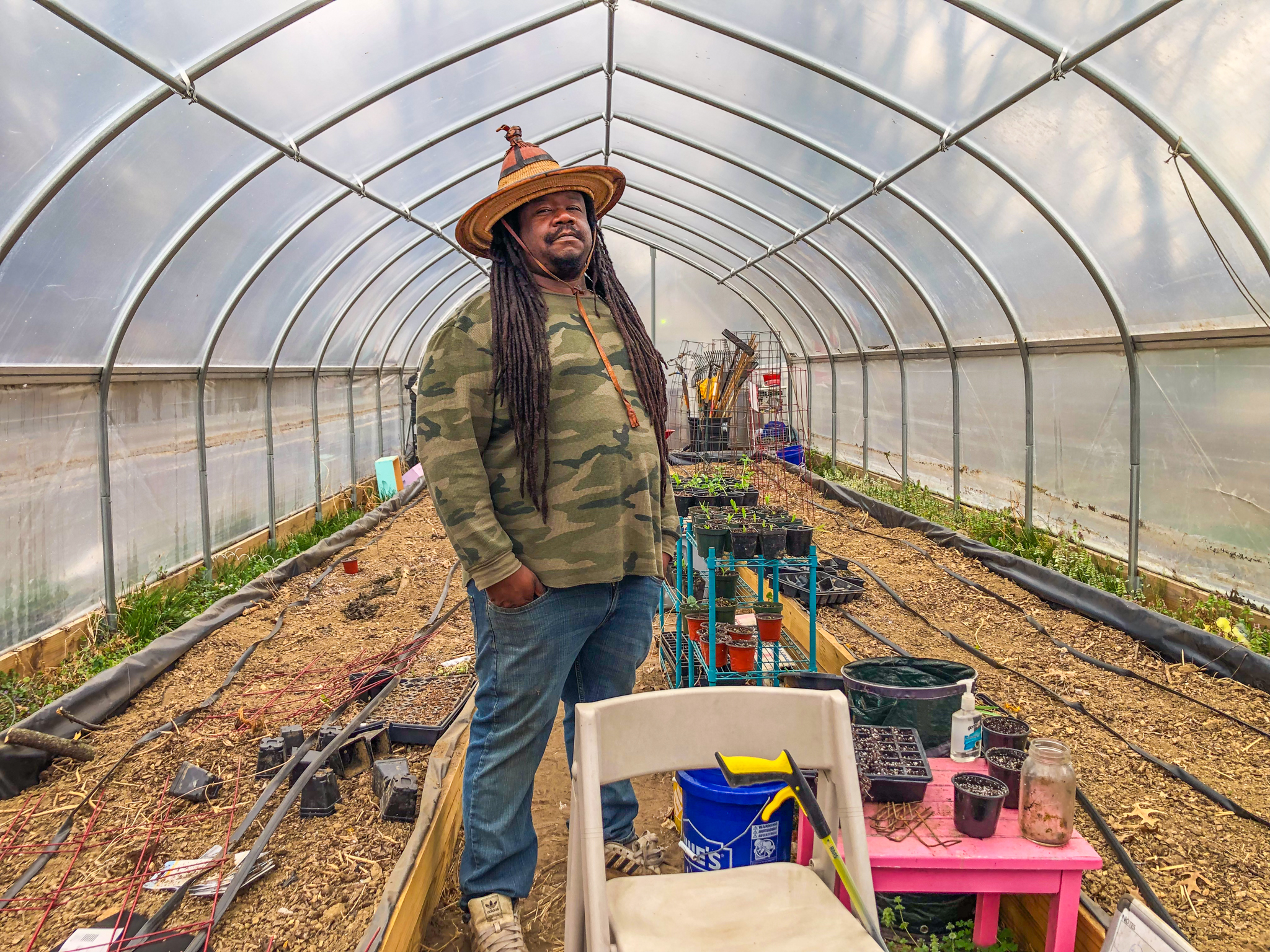
“I had houseplants that would stay alive because they are very hardy or whatever, but I never tried anything from seed to maturity,” Michael explained. “I just was like, ‘Well if we have air, some good soil, sunlight and water—we put it in the ground and the universe does the rest.’ And so sometimes stuff works out and sometimes stuff doesn’t and that’s okay with me.”
Today, Fifth Element Farms grow household staples like tomatoes, peppers, spinach, kale, and zucchini. According to Michael, about 95 percent of their yield are given directly to neighbors in need.
“We take what we need for our families and give the rest to the community,” Michael said. “Everybody deserves access to fresh food.”
The farm sits in Louisville’s West End, a neighborhood often described as a food desert. Michael prefers to use the term food apartheid, which addresses the unique oppression of Black and Brown people in underserved areas. It’s a distinction rooted in policy and neglect rather than geography. When stores like Kroger, Pic-Pac, and Walmart shutter locations, residents without reliable transportation are left with few options.
“If there’s 60,000 people in the West End and one grocery store serving half of them and they close it without hesitation, that’s a problem with the food supply line,” Michael said.
What began as an emergency response has evolved into a form of quiet protest: “We’re saying to these corporations that control our food: you need to have more humanity. If you take away resources, we’ll just do it ourselves.”
In Louisville, the biggest challenges to urban farming aren’t only agricultural; they’re bureaucratic. Even when vacant lots sit unused for years, growers often can’t legally acquire them unless they submit a formal development plan, provide proof of funding, and meet zoning requirements that were written for commercial construction, not food production.
For urban farmers like Michael and Mariel, Louisville city codes seem to treat agriculture as an exception rather than an expected land use, which means crops can be cited as “overgrown vegetation” and certain parcels can’t be used for growing food at all unless a permanent structure is built on-site.
“If I grow corn, it’s considered grass over ten inches tall and that’s a violation,” Michael said.
For community growers like Fifth Element Farms, these rules turn simple expansion into a maze of paperwork, permits, and penalties, making it easier for large developers to buy land than for neighborhood farmers trying to feed the people who live there.
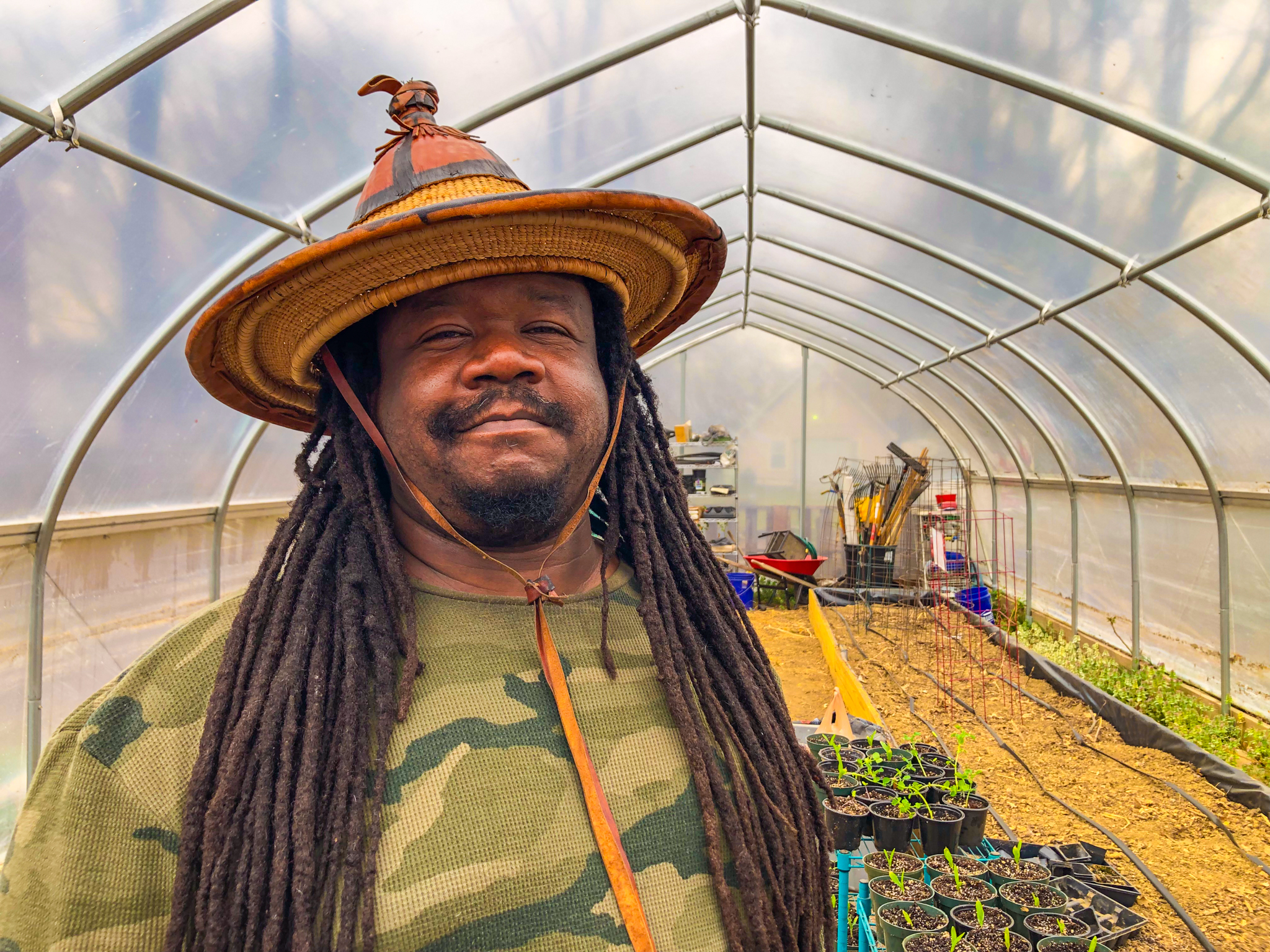 Even so, Fifth Element Farms endures. The project has found allies in local organizations such as the Jefferson County Soil and Water Conservation District, Urban Agriculture Coalition, and Cooperative Extension representatives like Bethany Pratt.
The farm’s name is both a nod to hip-hop culture and a cult-classic film. In hip-hop, the fifth element is knowledge and understanding, a principle that Michael and Mariel apply to the science of growing food.
“And yeah, it’s also a shout-out to the movie The Fifth Element with Bruce Willis,” Michael said with a laugh.
For Michael and Mariel, farming is both an act of reclamation and resistance.
“Most of my career has been working in the community,” he said. “And for me, this is taking back farming from history books that only tie it to slavery. Our ancestors were farmers before they were enslaved. This is reconnecting to the land the way we were meant to.”
As Fifth Element Farms expands, Michael envisions partnering with food pantries and teaching others to grow their own food.
“We just want to show that we have agency over our futures,” Michael explained. “If they take away the grocery stores, we’ll feed ourselves.”
 KY Place